

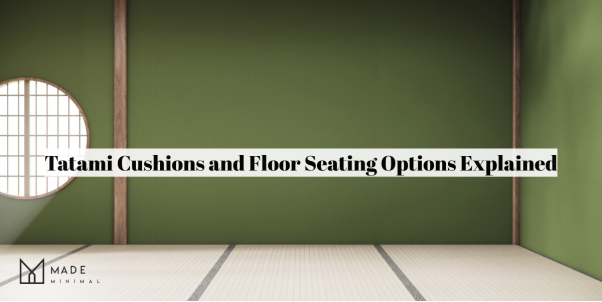
Floor cushions have become surprisingly popular in Australian homes lately. And yes, Australians are finally catching on to what Japanese homes figured out centuries ago. They’ve understood that living closer to the ground creates a calm, grounded feel which suits reading, meditation, or simpler seating choices.
Tatami cushions and other floor cushions in Australia bring a minimalist Japanese style into your space without requiring a full room makeover. They’re practical, don’t eat up much room, and suit both small apartments and larger homes.
This guide covers what makes tatami cushions different, the types of Japanese cushions available, and how to choose the right floor seating for your living room. So, you’ll learn what to expect comfort-wise and how to keep them in good shape long-term.
Let’s dive in.
What Makes Tatami Cushions Different from Regular Floor Cushions?
Tatami cushions are different from regular floor cushions because they use firmer materials and flatter construction. Here, the difference isn’t in thickness, but in how the cushion holds your body. For example, it can encourage you to sit upright or let you sink into it.
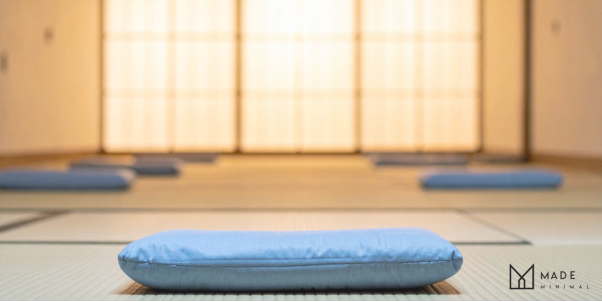
Now, let’s have a look at what sets tatami cushions apart from standard floor seating:
Traditional Tatami Mat Construction
Tatami mats use woven rush grass over compressed rice straw for firm support. The rush grass itself has a slightly rough texture that breathes well. Plus, underneath, the rice straw creates a base to give enough back-up without collapsing under weight.
Beyond seating surfaces, traditional Japanese homes use tatami as flooring mats. This usage alone proves how durable and supportive the material actually is.
How Tatami Cushions Adapt to Modern Design
Traditional tatami cushions convert into modern cushions by mimicking a firm feel, where they are made using foam or cotton fill instead of rice straw.
Even with this modern form, they retain the flat, supportive structure but add more portability. This way, you can move them between rooms or tuck them away when guests come over.
We’ve seen some versions where builders use actual rush grass covers for authentic texture and earthy smell. Meanwhile, others use similar-looking fabrics but are easier to wash.
Comfort and Support: What to Actually Expect
Tatami cushions encourage upright posture, which is why they’re popular for meditation and tea ceremonies. However, your hips and ankles might feel sore initially if you’re not used to floor sitting, particularly during the first few sessions.
But don’t worry. The firmness takes time to adjust when you’ve spent years on softer cushions. Once your body adapts, they work well for extended sitting without causing the lower back strain you get from slouching.
Types of Japanese Floor Seating You Should Know
The best part about Japanese floor seating is the variety available for different comfort needs. You’ve got flat cushions for meditation, chairs with backrests for lounging, and modern hybrids that blend traditional firmness with contemporary style.
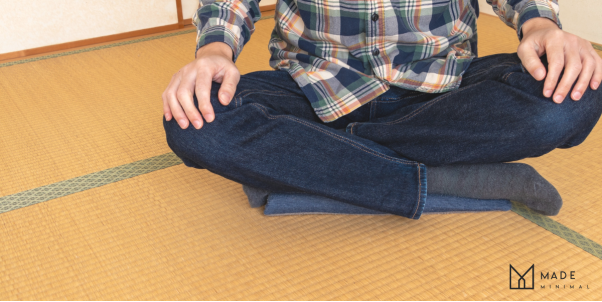
Here is the range of options worth considering:
Zabuton: The Classic Square Floor Cushion
Zabuton are flat, square cushions about 50-60 cm wide, traditionally used for meditation. They provide enough padding for hardwood or tatami floors without adding excess height, so you’re still sitting low to the ground.
Most zabuton range from 5 to 8 cm thick. In terms of pricing, handmade versions with natural cotton fill cost more than mass-produced foam options. But the difference between them shows up in how they hold their shape over time.
Zaisu Chairs and Floor Pillows with Backrests
Zaisu chairs add a backrest to floor cushions for lounging or working comfortably. And that’s where things get interesting, because suddenly you’ve got proper lumbar support without needing a full sofa taking up half your room.
Most importantly, they fold flat for storage and suit small apartments or minimalist living rooms. Besides, its backrests angle between 90-120 degrees, which supports your spine during longer sitting sessions.
Verdict: All these advantages make them perfect for relaxation or even working from the floor.
Modern Tatami-Style Floor Cushions
Contemporary designs blend traditional tatami firmness with modern fabrics and colours. Through our work at Made Minimal, we’ve noticed customers prefer models with removable covers, particularly the zipper ones, which make washing straightforward.
That’s why some floor cushions now include removable covers for washing or seasonal style changes.
Generally, thicker models around 8-10 cm offer more cushioning for people who find traditional zabuton too firm. It gives you a middle ground between authentic Japanese cushions and softer floor pillows.
Choosing Floor Seating for Your Living Room Setup
Ever wondered if floor cushions would actually work in your space? Well, the answer depends less on the cushions themselves and more on how your room functions and what you actually need from the seating.
Let’s have a look at the elements you should consider when you’re figuring out the right setup:
- Ceiling Height and Room Size: Low ceilings make floor seating feel intentional rather than awkward, while high ceilings can make the setup look oddly empty. That’s why considering the proportions is more important than you’d think. Particularly in Brisbane homes where older builds have taller ceilings.
- Low Coffee Tables or Kotatsu-Style Setups: Floor seating works best when paired with tables around 35-40 cm high. You might be wondering whether your existing furniture will play nicely with cushions. Honestly, mixing standard-height tables with floor cushions creates an uncomfortable reaching situation, and it contradicts the whole point.
- Handles or Lightweight Construction: Moving heavy floor cushions around weekly gets old fast. So, choose options with handles or built-in straps for easy rearranging during cleaning or when guests come over.
- Neutral Colours versus Bold Patterns: If your home already has strong colours or busy textures, neutral cushions in linen or cotton keep the space from feeling chaotic. Meanwhile, bold patterns work when everything else stays simple, and you want the floor seating to become a focal point.
- Cushion Thickness: We’ve seen that thicker cushions, around 8-10 cm, provide better support for extended sitting in both meal time and playtime with kids. On the flip side, thinner options around 5 cm suit shorter sessions or when you prefer the authentic experience.
- Storage Flexibility: Stackable cushions or foldable designs take up less closet space if you switch between floor and regular sofa arrangements. However, some people keep their floor seating out permanently. But in smaller places where every square metre counts, being able to tuck them away makes the whole setup feel less permanent.
Suggestion: The perfect range depends on how you actually use your space. Start with one or two cushions in a high-traffic place, test them for a few weeks, then add more if the setup works for your daily routine.
Caring for Tatami Cushions Long-Term
Now that you’ve chosen your cushions, you should also learn proper care to keep them fresh for years. Frankly, tatami cushions and floor seating need a bit more attention than throwing a sofa cover in the wash, but the maintenance isn’t so complicated.
Here’s what actually works:
- Weekly Sunlight Airing: Believe it or not, just 30 minutes outside prevents moisture buildup and musty smells better than any spray. That’s why place them somewhere with good airflow, flip halfway through, and you’re done.
- Gentle Vacuuming: Use the upholstery attachment on low suction to remove dust without damaging woven fibres. We know rush grass fabrics are tougher than they look, but aggressive vacuuming can loosen the weave over time.
- Immediate Spot Cleaning: When you spill something on a cushion, just pat the area with a damp cloth instead of rubbing. To make it more efficient, you can use a tiny touch of mild soap for tougher stains. But don’t forget to rinse it well to avoid residue.
Quick tip: Rotate your cushions every few weeks so they wear evenly. Otherwise, it will give you an uneven feel.
This way, proper care allows your cushions to stay comfortable and last longer. And the time you spend on maintenance pays off when you’re not replacing them every couple of years.
Making Floor Seating Work in Your Space
Japanese cushions bring a different kind of comfort to your home. They automatically encourage you to slow down and sit with intention rather than collapse into something soft. For this, the setup doesn’t need to be complicated or expensive, and you don’t need to commit to a full room transformation to see.
Start small with one or two cushions in the space where you already spend time. Test them for relaxation, meals, or just reading on a Sunday afternoon. You’ll figure out pretty quickly whether the low seating works for your body and daily routine.
If you’re ready to explore your options, Made Minimal offers a range of minimalist floor seating that suits Australian homes. Browse our collection, find what feels right for your space, and bring a calm, grounded feeling into your living room.
Keep an eye for more latest news & updates on Hoseasons!
 Dmitri